

Share
What is Qodo?
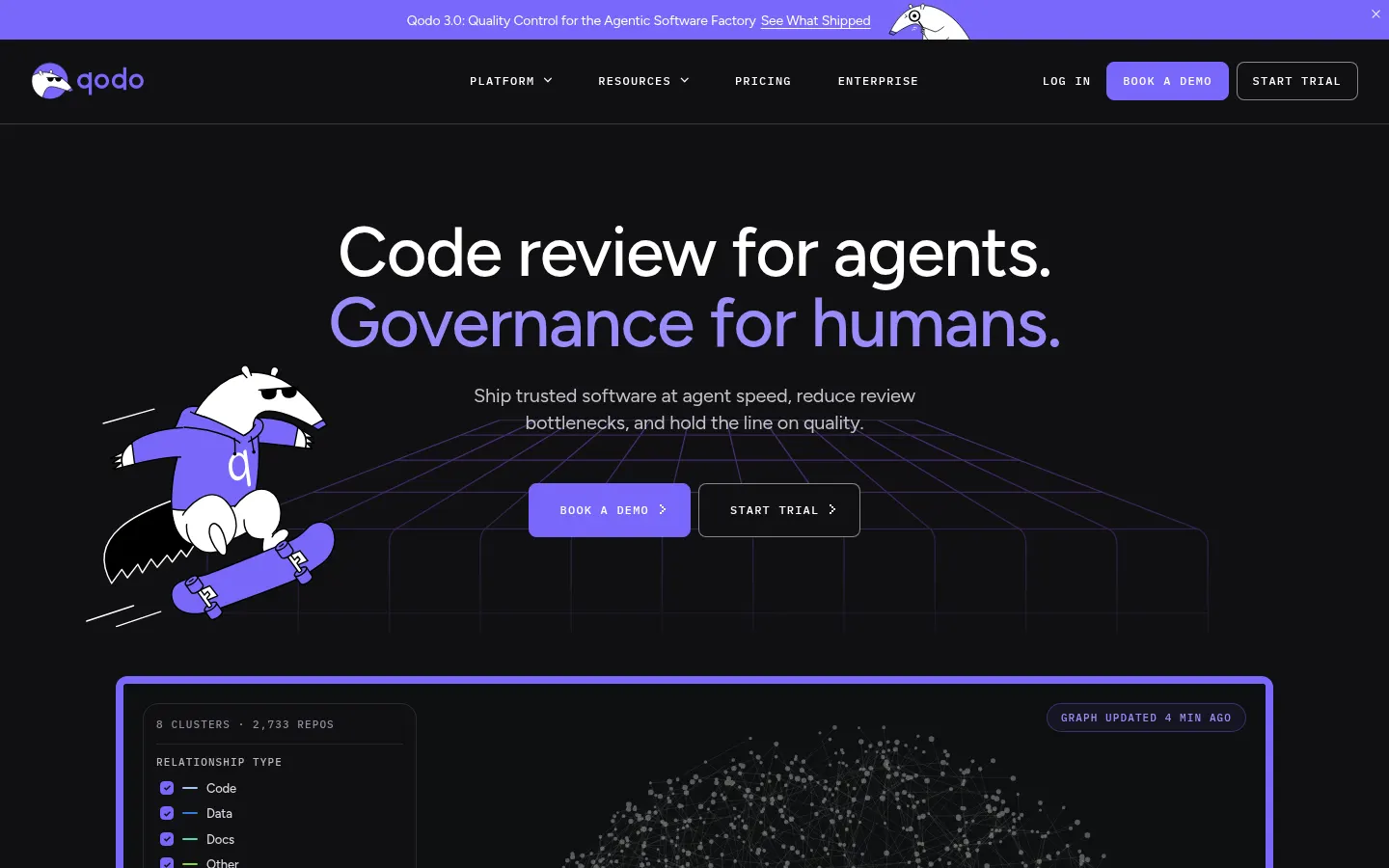
Qodo, formerly known as Codium, is an AI code review platform that analyzes every pull request with specialized agents and full-codebase context. It positions itself as quality control for teams that already ship code with agents such as Codex, Claude or Kiro.
What is Qodo used for?
It removes the review bottleneck without lowering the quality bar. Its agents flag real bugs, rule violations and requirement gaps on every PR with less noise than a linter, and developers can fix them without leaving the editor.
How does Qodo learn my team's rules?
Qodo turns knowledge scattered across wikis and PR history into self-learning rules that are machine-readable. It then measures whether they are followed, how many issues are resolved before merge, and surfaces conflicting or stale rules.
What does Qodo include?
- Agentic review on every pull request.
- Review skills that run inside the developer's own agent before the PR.
- Git and IDE integrations, plus a CLI for coding agents.
- A cross-repo dependency map to see the blast radius of each change.
- Dashboard with findings, resolution rates and risk by team.
Which platforms does Qodo support?
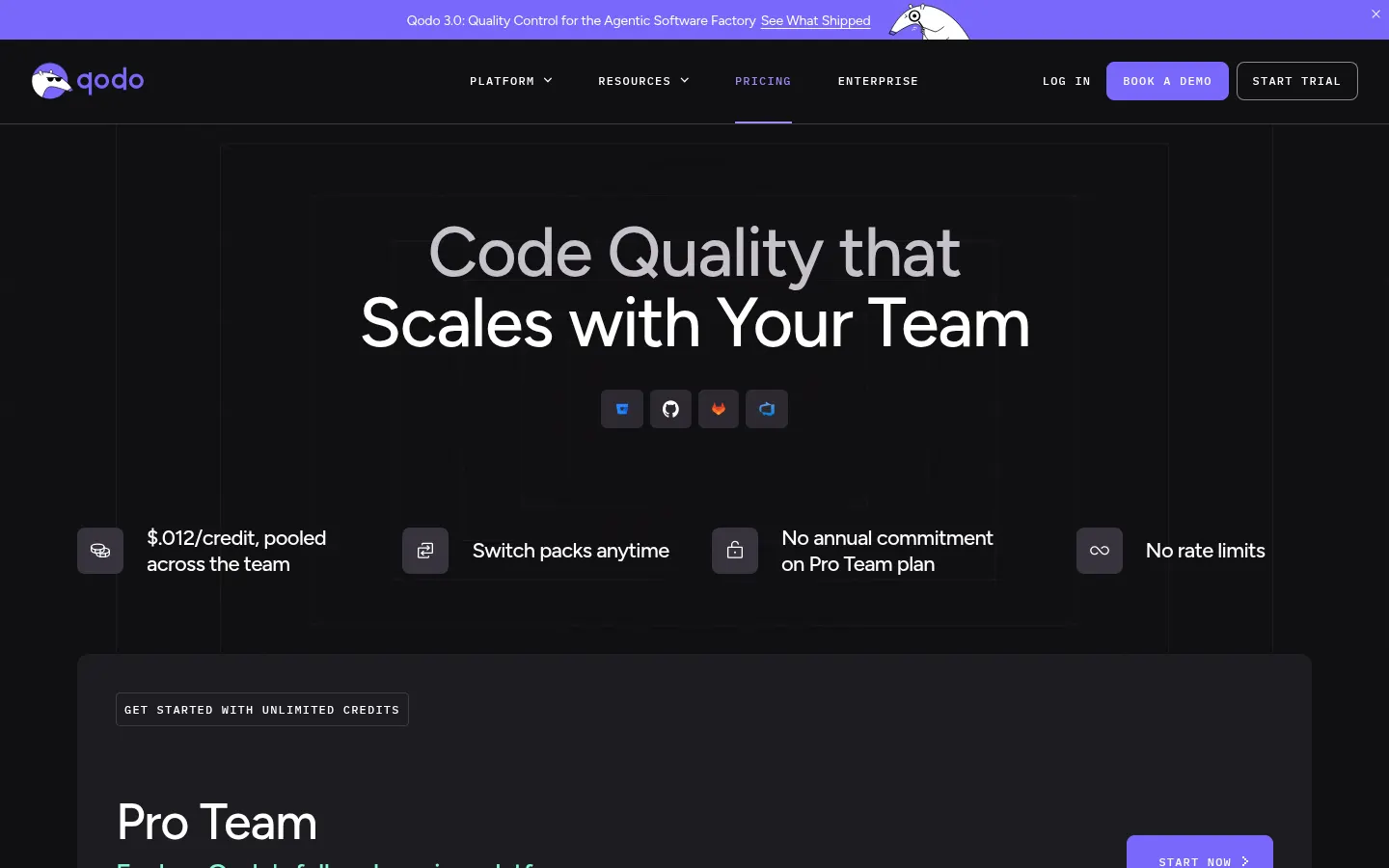
It installs on GitHub, GitLab, Bitbucket, Azure DevOps and Gerrit, with multi-tenant, single-tenant or on-premises deployment. It is SOC 2 Type II certified, and qualifying open source projects can apply for access at no charge.
Qodo pros and cons
- Pro: full-codebase context, not just the diff
- Pro: team rules that are learned and measured
- Pro: works with all major Git providers
- Con: no permanent no-charge tier for teams
- Con: large reviews consume more credits
Qodo features and use cases
How to use Qodo
Qodo FAQ
What is Qodo?
Qodo is an AI code review platform that analyzes every pull request with specialized agents and full-codebase context.
Is Qodo the same as Codium?
Yes, Qodo is the current name of the company formerly known as Codium.
Is Qodo free?
There is no permanent free plan, but it offers a 14-day trial without a credit card and free access for qualifying open source projects.
Which Git platforms does Qodo support?
GitHub, GitLab, Bitbucket, Azure DevOps and Gerrit are all supported.
What is a Qodo credit?
It is the unit that meters review activity: small PRs use fewer credits, while large or complex reviews use more.
What happens if I run out of Qodo credits?
Reviews keep running and overage is billed at the same per-credit rate, up to a monthly cap you set.
Does Qodo work with agents like Claude or Codex?
Yes, it offers a CLI and review skills so agents such as Codex, Claude or Kiro can review and fix their own code.
Can Qodo be self-hosted?
Yes, Enterprise plans support single-tenant or on-premises deployment.
What are the best Qodo alternatives?
On GptZone you can compare it with CodeRabbit, Greptile and CodeAnt.
Qodo pricing and plans
Reference price: 30 USD / month. Source · Verified: November 2, 2026
Prices in US dollars (USD). Checked on: 02/11/2026.
Trial: 14 days, no credit card, unlimited reviews and credits.
Pro Team: from $30 per month with 2,500 credits (about 18 reviews); packs of 5,000 (about 36) and 20,000 credits (about 144). Overage at $0.012 per credit, monthly billing with no commitment, designed for up to 30 users.
Enterprise: custom annual contract with bring-your-own LLM keys, single-tenant or on-prem and a dedicated CSM.
No permanent free plan; open source projects can apply for free access.
Qodo Screenshots
Qodo user reviews
Write a review
Checking your session...
Qodo Reviews
Loading reviews...
Qodo alternatives



LaunchProof
Audit websites across various browsers and devices to detect security, performance, or accessibility flaws, offering reports with solutions to fix them.
Together Link
Connect coding agents to open models to cut costs. Keep your existing tools and settings while optimizing token usage in every session.

Sitelemetry
AI-powered web audit tool for security, SEO, accessibility, and AI visibility. Provides detailed evidence and technical remediation guides.