
Share
What is Woolly?
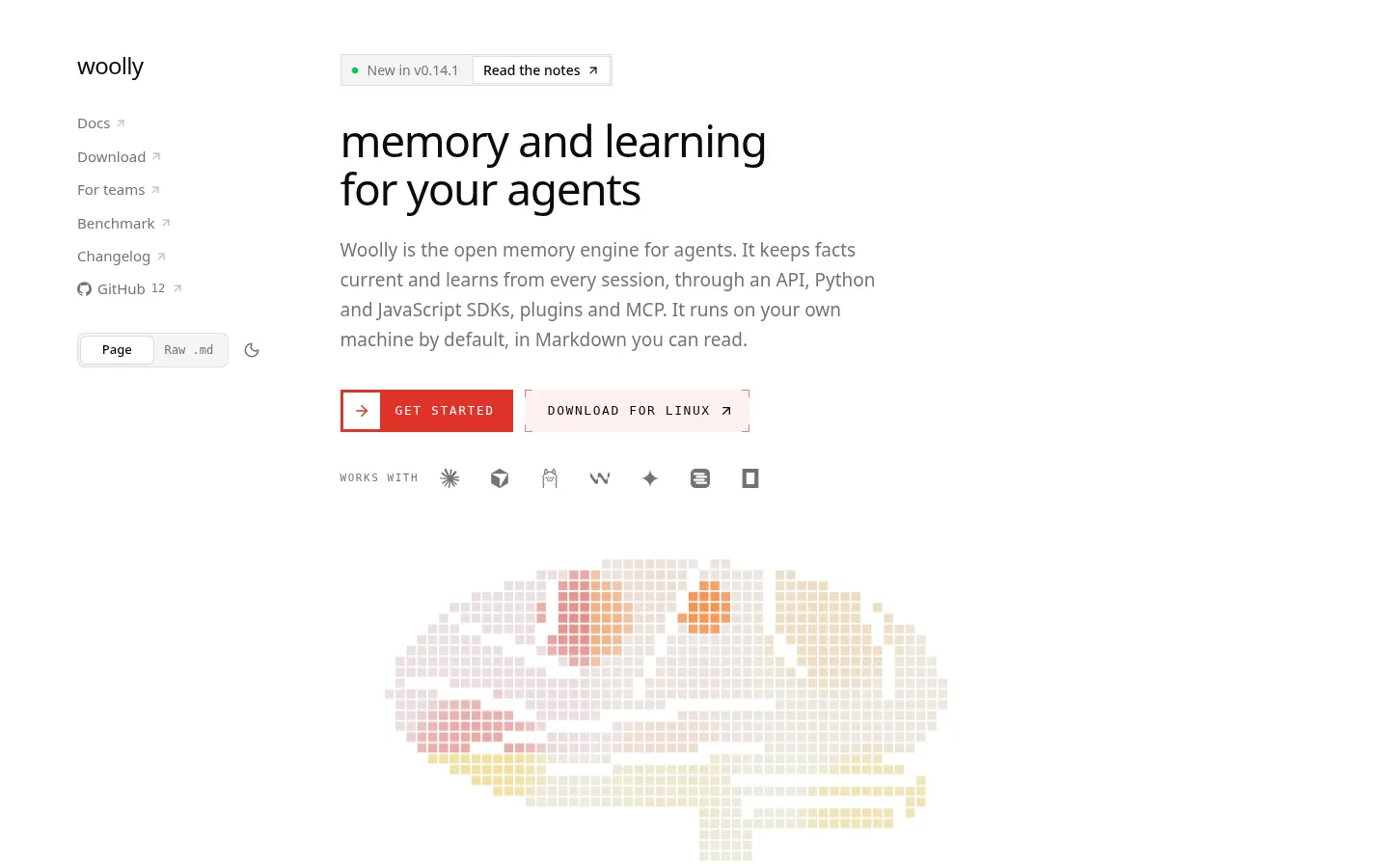
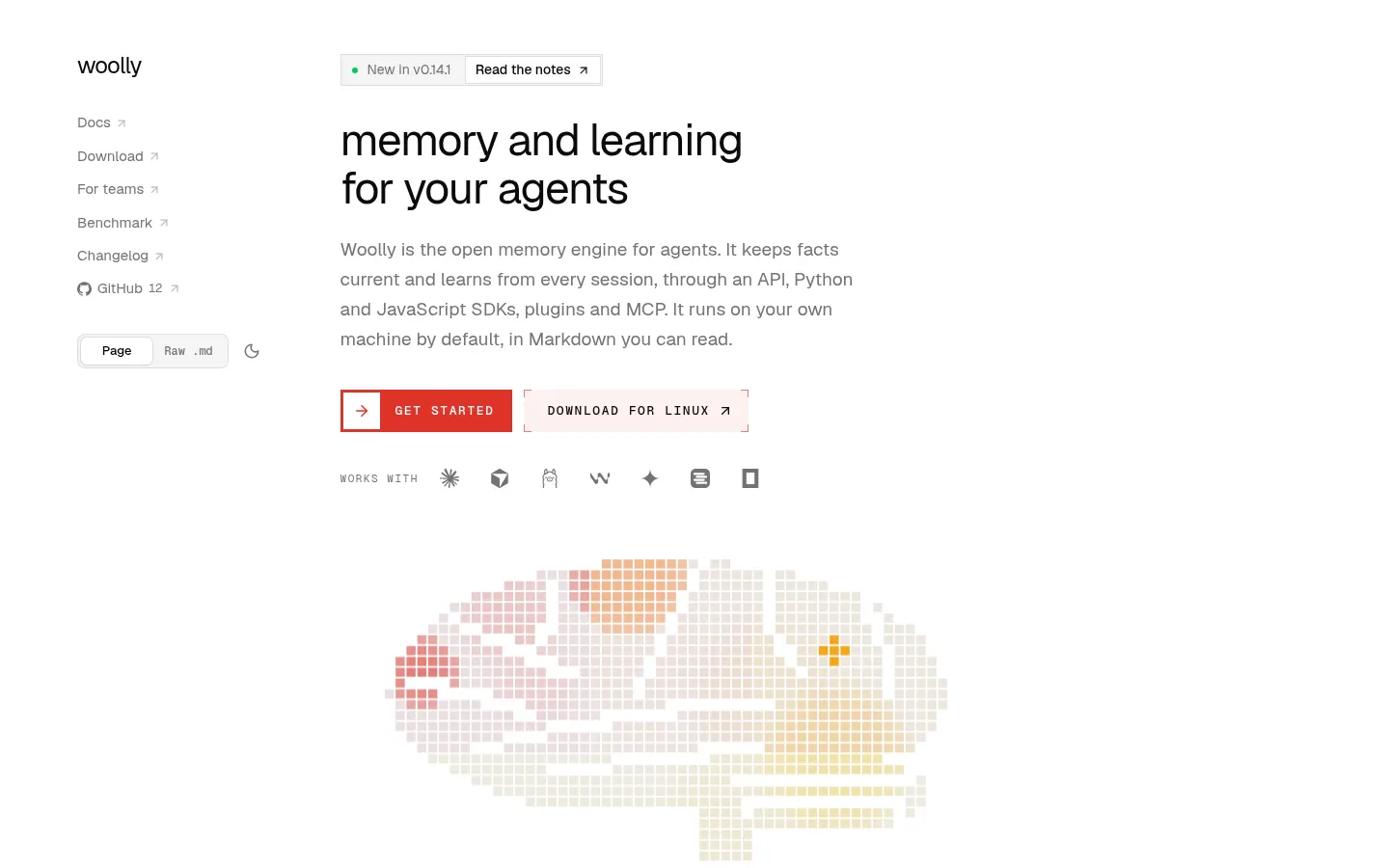
Woolly is an open-source AI tool that works as an open memory engine for agents. It keeps facts current and learns from every session, through an API, Python and JavaScript SDKs, plugins and MCP. By default it runs on your own machine and stores everything in readable Markdown.
What is Woolly used for?
It stops your AI tools from starting from zero. Without it, you explain your stack to Cursor, then to Claude Code, then to Codex. Woolly is the memory they share: one folder on your laptop, with no cloud and no account. When a session starts, your agent gets your profile, the project's notes and where you left off; when it ends, Woolly saves what you decided, why, and what you ruled out.
How does Woolly work?
Any MCP tool can save to and search Woolly: Claude Code, Claude Desktop, Cursor, VS Code, Windsurf, Codex, Gemini CLI, LM Studio or opencode, and woolly proxy extends it to Ollama. For agents you build there is an API shaped like mem0's: a local model decides whether each fact is new, an update or no longer true, with memories kept apart per user. While you're away, Woolly merges duplicates and turns past sessions into lessons.
Who is Woolly for?
- Developers who code with several AI tools.
- Teams that want project memory in git with woolly init.
- Anyone building agents that must remember each user.
- Users who put privacy and local models first.
Woolly pros and cons
Every fact keeps its history, and when an AI contradicts something you said, your version wins. It refuses passwords and keys, checks for injected instructions and never phones home; it is MIT licensed. On the downside, search by meaning and automatic learning need Ollama running.
Woolly features and use cases
How to use Woolly
Woolly FAQ
What is Woolly?
Woolly is an open-source memory engine shared by your AI agents and tools, stored as Markdown on your machine.
Is Woolly free?
Yes, it is free and MIT licensed, as noted in the pricing section.
Does Woolly send my data anywhere?
No, there are no servers, accounts or telemetry; your memories live in ~/.woolly.
Which apps work with Woolly?
Anything with MCP: Claude Code, Claude Desktop, Cursor, VS Code, Windsurf, Codex, Gemini CLI, LM Studio and opencode, plus Ollama via woolly proxy.
Do I need Ollama?
No, Woolly works on its own; with Ollama it adds search by meaning and learns facts from your chats.
How is it different from ChatGPT or Claude memory?
Those memories are locked inside one app on its servers; Woolly is one local memory for all your tools.
Can my team share memory?
Yes, run woolly init and commit .woolly/ in the repo; facts about you never go in the repo.
Does Woolly have an API?
Yes, a memory API with mem0's routes and field names, plus Python and JavaScript packages.
Does Woolly work in Spanish?
The site is in English; memory is Markdown text, so it can store notes in Spanish.
What are the alternatives to Woolly?
In our directory you can compare it with Zep, another memory layer for agents, or Hubzoid for sharing context across company agents.
Woolly pricing and plans
Reference price: 0 USD. Source · Verified: November 17, 2026
Reference amounts in US dollars (USD). Checked on: 17/11/2026.
Woolly is free and open source under the MIT license. It runs on your machines with no account and no servers.
Woolly Screenshots
Woolly user reviews
Write a review
Checking your session...
Woolly Reviews
Loading reviews...
Woolly alternatives



Liquid Inference
Liquid Inference is an LLM inference exchange where providers compete in an instant auction to answer each request at the best price and quality.